Why a Case Vignette Leaves Room for a Question
A case vignette for medical education helps students examine dialogue, setting and character voice, with a clear method for revising scenes without assuming motives.

A student reads a case vignette in which a casino employee asks a colleague to speak privately after a shift. The request is clear; its purpose is not. For medical education, that gap can give a group something specific to discuss: how wording shapes a conversation before anyone knows what the person wants to say.
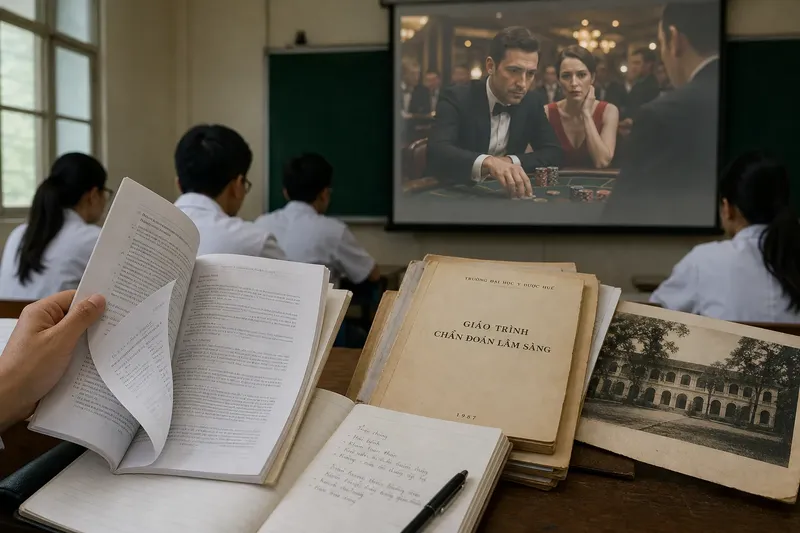
A vignette is a short, constructed scene used to prompt discussion. As a suggested teaching approach for learners at Trường Đại học Y Dược - ĐH Huế, a scene drawing on casino culture could focus on dialogue, the setting’s influence and the narrator’s choices. It would be a proposal for teaching, not a description of an established practice at the university.
Give the vignette one clear teaching purpose
Choose the skill or idea the scene is meant to bring into view. A vignette might invite learners to compare opening questions, examine how a narrator describes someone, or consider what a setting leads a reader to expect. Combining those aims can blur the discussion, so make one the centre and treat the others as supporting details.
For example, “What would you like to talk about?” leaves the employee room to choose a starting point. “Why are you keeping this from people?” assumes concealment before the person has explained anything. Learners can examine that difference without deciding what the employee’s circumstances must be.
The teaching purpose also helps determine which details belong. A casino can locate the scene and contribute atmosphere, but the venue itself does not establish a person’s needs, motives or health.
Use casino culture as context rather than explanation
Casinos can suggest chance, money and spectacle to readers. A vignette can make those associations part of the discussion: what might a reader expect from this setting, and does the dialogue support or unsettle that expectation?
Keep the scene’s actions distinct from a narrator’s interpretation. An employee might arrive for a shift, pause at a staff entrance and ask a colleague for a private conversation. Unless the character says why, the scene has not established the reason.
Adding a string of ominous clues is not worth the effort if it only encourages learners to guess at a hidden explanation. A quieter scene can keep attention on the chosen teaching purpose rather than turning the character into a mystery.
Choose a form that makes the discussion concrete
Use dialogue to examine an opening exchange
A short exchange gives learners exact wording to work with. They can ask what each speaker knows at that point, what an opening question assumes, and how it might leave room for the other person to respond.
Use narration to examine how description steers a reader
Compare “the employee is hesitant” with “the employee pauses before speaking”. The first assigns an interpretation; the second describes an action. Learners can discuss how each version affects their reading without treating either sentence as a clinical finding.
Use the character’s words to show what they want
A direct request gives the character an active voice, even if the surrounding context remains limited. Let the character’s words carry what they actually say, rather than having the narrator replace them with an unspoken explanation.
What questions keep the discussion grounded?
What makes an opening question useful?
A useful opening question points to the teaching purpose and allows more than one response. “What does this wording invite the reader to assume?” directs attention to the text rather than asking learners to infer a diagnosis.
How can students discuss the casino setting fairly?
Ask which details the scene gives about the employee, then distinguish them from associations a reader may bring to the venue. That lets learners examine the setting’s influence without treating it as evidence of character or circumstance.
When should a facilitator add context?
Add context when learners cannot follow the intended discussion because a necessary part of the scene is unclear. Leave out details that merely steer the group towards a preferred judgement.
Revise the scene by tracing what each sentence adds
Say a facilitator drafts an invented scene with these starting details: one casino employee has finished a shift; a colleague is nearby; the employee asks to talk somewhere private. The draft adds, “He is ashamed of what happened,” although no dialogue or action supports that claim.
The facilitator removes that sentence, then asks the group to compare the versions. In the revised scene, the observable details are the shift’s end, the colleague’s presence and the request for privacy; the reason for the request remains unknown. The discussion can now examine how the added sentence directed readers, and whether that direction serves the teaching purpose. The first version supplies an emotional interpretation; the revised one gives learners more room to consider what the text establishes and what it leaves open.
Before using a vignette, check each feature and decide what to change:
- Teaching purpose: If the scene appears to have several competing aims, choose one to foreground and remove details that distract from it; if one aim is already clear, keep the scene aligned with it.
- Narrator’s claims: If the narrator assigns a motive the character has not expressed, replace it with an observable action or make clear that it is an interpretation; if the character states the motive, attribute it to their words.
- Character’s voice: If the narrator supplies all the meaning, add a line that lets the character state a relevant need; if the character already speaks clearly, avoid an explanation that repeats or overrides them.
- Casino setting: If the venue is being used to imply a personal problem, remove that implication or add context needed for the teaching purpose; if it only locates the scene, leave it as background.
- Discussion prompt: If a question assumes a diagnosis or hidden motive, replace it with one about wording, interaction or stated needs; if it invites close reading without assuming an answer, retain it.
- Missing context: If learners cannot follow the intended discussion without a detail, add it in plain language; if the omission does not obstruct the task, preserve the uncertainty.
Keep the teaching discussion separate from clinical judgement
A vignette can help learners notice who speaks, which details a narrator selects and how a setting affects interpretation. Those are questions about language and representation, not substitutes for assessing a real person’s care needs. If a genuine health or care concern arises in teaching, learners should follow their programme’s supervision and referral arrangements.
When revising a case vignette for medical education, read the dialogue aloud and mark any sentence that claims more than the scene establishes. That check can help keep the teaching question clear while leaving space for the person in the scene to speak for themselves.